
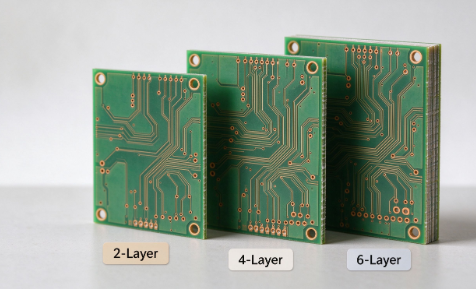
Choosing the right PCB layer count is the first big decision in any board design.One of the first and most important decisions in any PCB design is how many copper layers your board needs. Choose too few, and you struggle with routing, noise, and signal integrity. Choose too many, and you pay for capability you never use.
Layer count drives cost, lead time, and manufacturability. This guide breaks down the trade-offs between 2-layer, 4-layer, and higher multilayer boards, and gives you a practical way to decide.
Why Does Layer Count Matter?
Every copper layer gives you more routing space, but adds manufacturing steps. Each additional layer means more laminating, more drilling, and more plating — which raises cost and extends lead time. Getting the layer count right means balancing performance, cost, and manufacturability.
| Layer count | Typical use | Routing space | Cost | Lead time |
| 1-layer | Simple, low-cost boards | Very limited | Low | Short |
| 2-layer | Most hobby and simple projects | Moderate | Low–medium | Short |
| 4-layer | Most professional designs | Good | Medium | Medium |
| 6+ layer | High-density, high-speed | Extensive | High | Longer |
2-Layer PCBs
A 2-layer board has copper on the top and bottom, with traces routed on both sides and connected through vias.
Good for:
- Simple digital and analog circuits
- Low component counts
- Prototypes and cost-sensitive projects
- Applications with relaxed signal-speed requirements
Limitations:
- Limited routing space on high-density designs
- Harder to maintain clean ground and power planes
- More challenging for high-speed or impedance-controlled signals
2-layer boards are the most common starting point and remain a smart choice for many products.
4-Layer PCBs
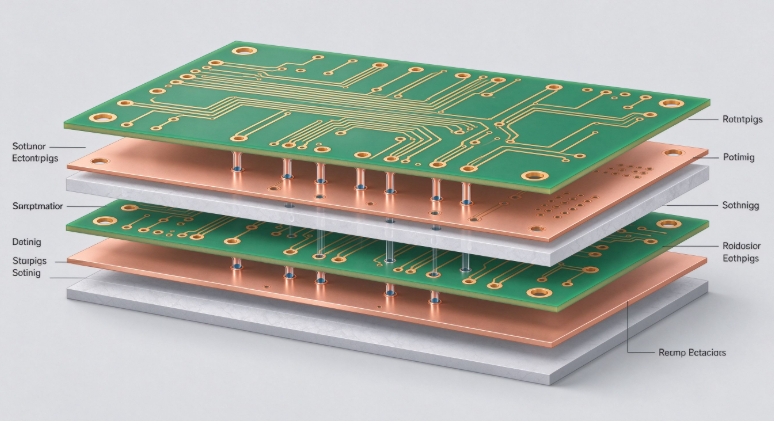
A 4-layer board adds two inner layers, which are typically used as solid power and ground planes.
Good for:
- Most professional product designs
- Mixed analog + digital circuits
- Better EMI / signal-integrity control
- Boards with moderate component density
Advantages over 2-layer:
- Clean, continuous ground and power planes reduce noise
- Shorter, more predictable return paths for high-speed signals
- More routing room without expanding the board size
For most products moving from prototype to production, 4 layers is the sweet spot — it solves most signal and noise problems without a large cost jump
Multilayer Boards (6+ Layers)
Boards with six or more layers add dedicated layers for signal routing, power, and grounding.
Good for:
- High-density, high-speed designs
- Complex BGAs with many pins
- RF and impedance-controlled applications
- Products where board size must stay small
Trade-offs:
- Higher cost per layer
- Longer lead times
- More complex manufacturing and DFM requirements
Multilayer boards earn their cost when signal integrity, density, or size demand them — not for simple designs.
How to Decide: A Practical Checklist
Ask yourself these questions before you lock in a layer count:
- How many components and how dense is the routing?
- Are there high-speed signals or impedance-controlled traces?
- Is there sensitive analog circuitry that needs clean ground planes?
- Do power and ground routing need dedicated planes?
- How important are cost and lead time for this project?
A simple rule of thumb:
- Low density + relaxed signals → 2 layers
- Moderate density or mixed signals → 4 layers
- High density, high speed, or small size → 6+ layers
Layer Count and DFM
Layer count is also a DFM decision. Higher layer counts mean more process steps, and your design must respect manufacturability at every layer — via types, drill sizes, and layer registration all matter. If you are unsure, discussing layer count with your manufacturer early avoids costly redesigns.
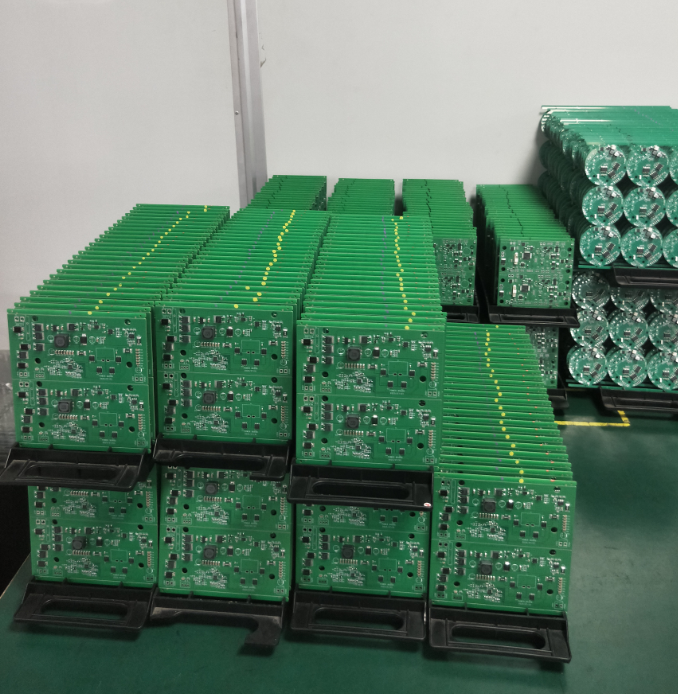
At Volectronics Tech Co., Ltd, we produce PCBs from 2-layer up to high multilayer stacks, with the equipment and process control to hold tight tolerances at every layer count.