MCPCB LED & SMT PCB Assembly Service – UL & RoHS Complian

· October 26, 2026

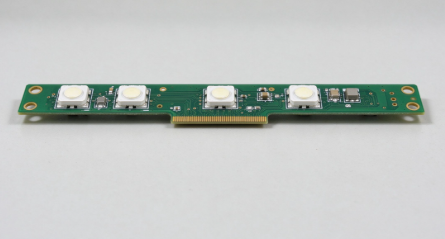
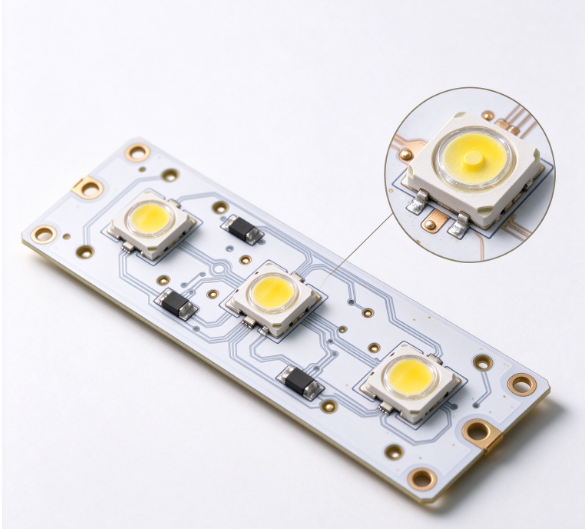
MCPCB LED & SMT PCB Assembly Service delivers reliable turnkey PCBA solutions for high-power LED lighting modules, with strict thermal control and void inspection during soldering.Our integrated MCPCB LED and SMT PCB assembly service combines metal core PCB manufacturing and SMD component mounting in one stop, helping lighting brands cut sourcing cycles and reduce quality

MCPCB LED & SMT PCB Assembly Service – UL & RoHS Complian Read More »
 SMT PCB Assembly for MCPCB LED Modules: Process, Pitfalls & Reliability Tips

· October 24, 2026

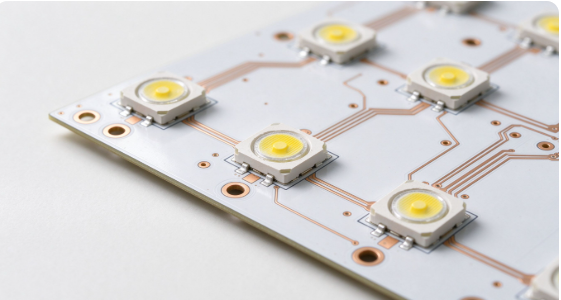
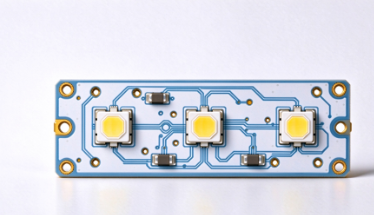
SMT PCB Assembly for MCPCB LED Modules has unique thermal challenges. High-power LEDs fail mostly from heat. That’s why engineers choose MCPCB (metal core PCB, usually aluminum core) instead of regular FR4 boards. But MCPCB LED SMT assembly is not the same as standard PCB assembly. The same metal core that dissipates heat during operation

 SMT PCB Assembly for MCPCB LED Modules: Process, Pitfalls & Reliability Tips Read More »

Aluminum Nitride (AlN) Ceramic Substrate vs Aluminum MCPCB: Which Thermal PCB Should You Pick?

· October 24, 2026

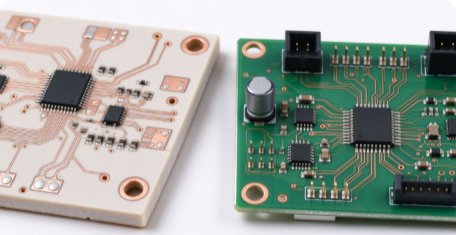
Aluminum Nitride (AlN) Ceramic Substrate vs aluminum mcpcb are two popular thermal circuit substrates for high-power devices. Both serve thermal management purposes but differ widely in thermal conductivity, insulation, cost and suitable applications. This guide compares their pros, cons and helps you select the right thermal PCB. Thermal management is one of the biggest design

Aluminum Nitride (AlN) Ceramic Substrate vs Aluminum MCPCB: Which Thermal PCB Should You Pick? Read More »

LED PCB Design: Key Factors for Brightness, Heat and Lifespan

· October 21, 2026

LED PCB design is different from designing ordinary circuits. LEDs are current-driven, heat-sensitive, and often exposed to harsh conditions. Get the PCB design wrong and your LEDs will flicker, overheat, or die early — even with perfectly good components.LEDs are current-driven, heat-sensitive, and often exposed to harsh conditions. Get the PCB design wrong and your

LED PCB Design: Key Factors for Brightness, Heat and Lifespan Read More »

High-Frequency PCB: Materials, Design Rules and When You Need One

· October 20, 2026

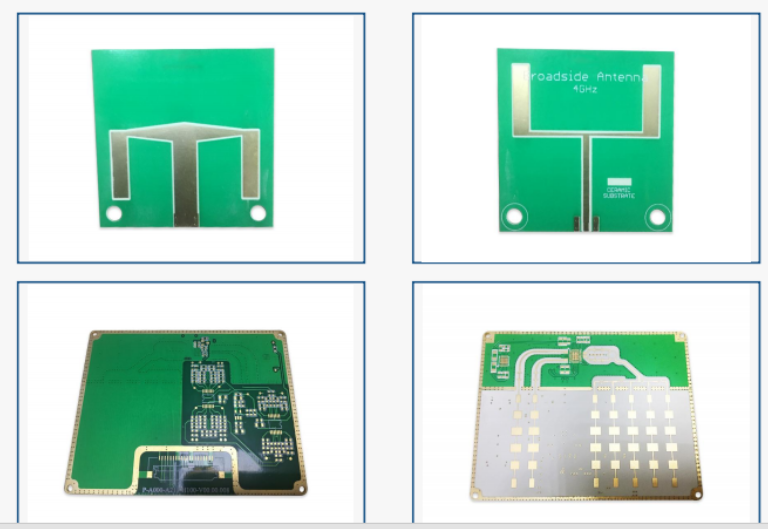
A high-frequency PCB is built differently from a standard board — the substrate itself affects signal quality.Standard FR-4 handles most circuit boards without issue. But when signals push into the high-frequency range — RF, radar, 5G, and fast digital interfaces — the board material itself starts to matter. At these frequencies, the substrate becomes part

High-Frequency PCB: Materials, Design Rules and When You Need One Read More »

PCB Manufacturing Process: Step-by-Step from Bare Board to Finished PCB

· October 20, 2026

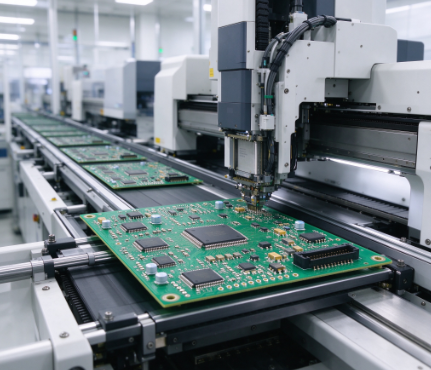
How does a bare copper-clad laminate become the finished PCB inside your product? The process looks simple on a schematic, but behind every board are dozens of precise manufacturing steps — each one affecting quality, yield, and cost. This guide walks through the complete PCB manufacturing process, from raw laminate to a board ready for

PCB Manufacturing Process: Step-by-Step from Bare Board to Finished PCB Read More »

How to Choose PCB Layer Count: 2-Layer vs 4-Layer vs Multilayer

· October 18, 2026

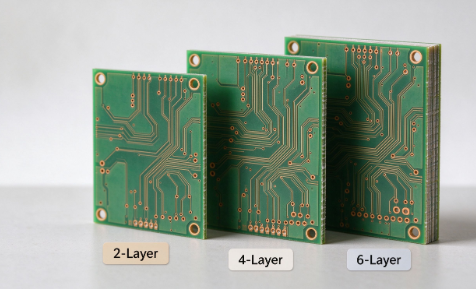
Choosing the right PCB layer count is the first big decision in any board design.One of the first and most important decisions in any PCB design is how many copper layers your board needs. Choose too few, and you struggle with routing, noise, and signal integrity. Choose too many, and you pay for capability you

How to Choose PCB Layer Count: 2-Layer vs 4-Layer vs Multilayer Read More »