
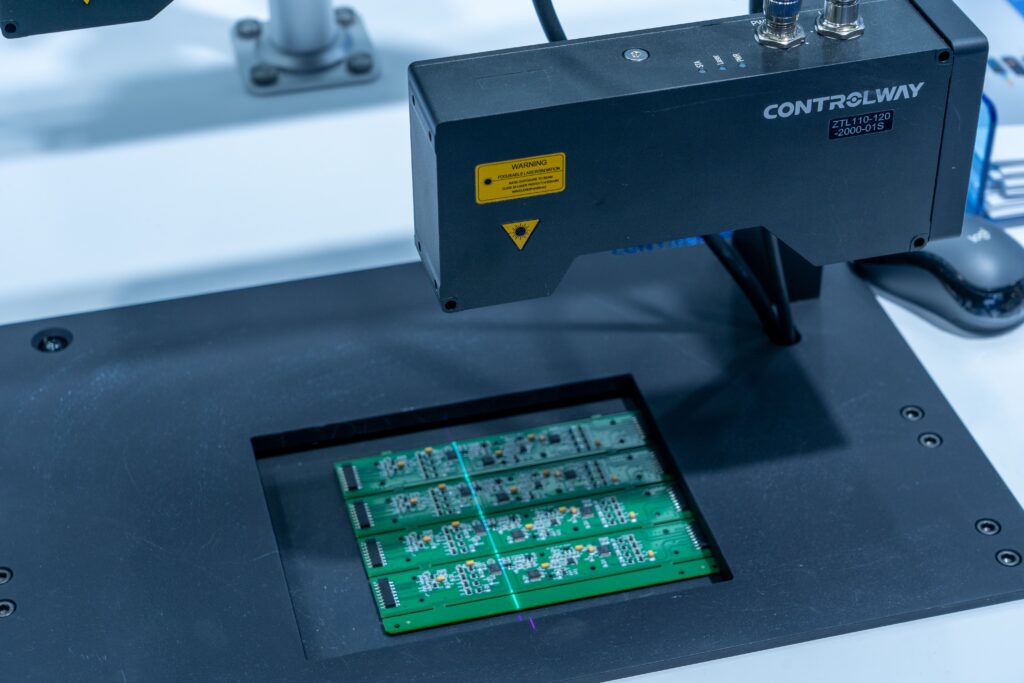
When you outsource PCB manufacturing, the biggest worry is always the same: Will the boards arrive on time, and will they work?
For hardware engineers, product managers, and startup founders, a single defective PCB can mean days of rework, missed launch deadlines, and thousands of dollars in lost time. At Volectronics Tech, PCB quality control isn’t an afterthought—it’s built into every step of our process.
In this article, we walk you through exactly how we inspect your PCBs from the moment we receive your Gerber files to the day they ship to your door.
1. Design Review Before Production Starts
Before any board goes into production, our engineering team reviews your design files for manufacturability (DFM). This is the first—and often most important—quality checkpoint.
We check:
- Minimum trace/space against our production capability
- Drill size and annular ring requirements
- Impedance control specifications
- Solder mask and silkscreen conflicts
- Any potential short or open issues
- Panel utilization and array recommendations
- Test point availability for flying probe testing
If we spot a problem, we send you a DFM report with suggestions—before production starts, not after. Catching a design issue at this stage costs almost nothing. Catching it after assembly costs everything.
2. Incoming Quality Control (IQC)
All raw materials are inspected before they enter the production line. Bad materials mean bad boards, no matter how good your process is.
We verify:
- Copper clad laminate: We check thickness, material grade (FR-4, aluminum, Rogers, polyimide, etc.), TG value, and copper weight. Every batch is measured, not just trusted from the supplier’s paperwork.
- Solder mask ink: Color consistency, shelf life, and curing specifications.
- Surface finish materials: HASL, ENIG, OSP, immersion silver—all inspected per specification.
- Drill bits and tooling: Worn drill bits cause delamination and burrs. We track usage and replace them on schedule.
We don’t cut corners here. Substituting a cheaper laminate to save $50 on a batch can ruin a $50,000 product.
3. In-Process Quality Control (IPQC)
Our PCB quality control process has dedicated inspection checkpoints at every critical production step.
1)After inner layer etching
- AOI (Automated Optical Inspection) scans for shorts, opens, and line width defects
- Coupon testing for etch factor uniformity
- Microsection sampling for copper thickness
2)After lamination
- X-ray inspection for layer alignment registration
- Board thickness measurement across the panel
- Delamination detection via ultrasonic scanning
3)After drilling
- Microsection analysis for hole wall quality and barrel thickness
- Burr inspection on entry and exit sides
- Hole diameter measurement
4)After copper plating (PTH)
- Copper thickness measurement on hole walls
- Adhesion testing
- No-plate hole inspection
5)After outer layer etching
- AOI scan again for final outer layer quality
- Impedance testing on test coupons (for controlled impedance boards)
- Short/open testing
6)After solder mask application
- Registration inspection for mask alignment
- Coverage inspection for exposed pads
- Solder mask thickness measurement
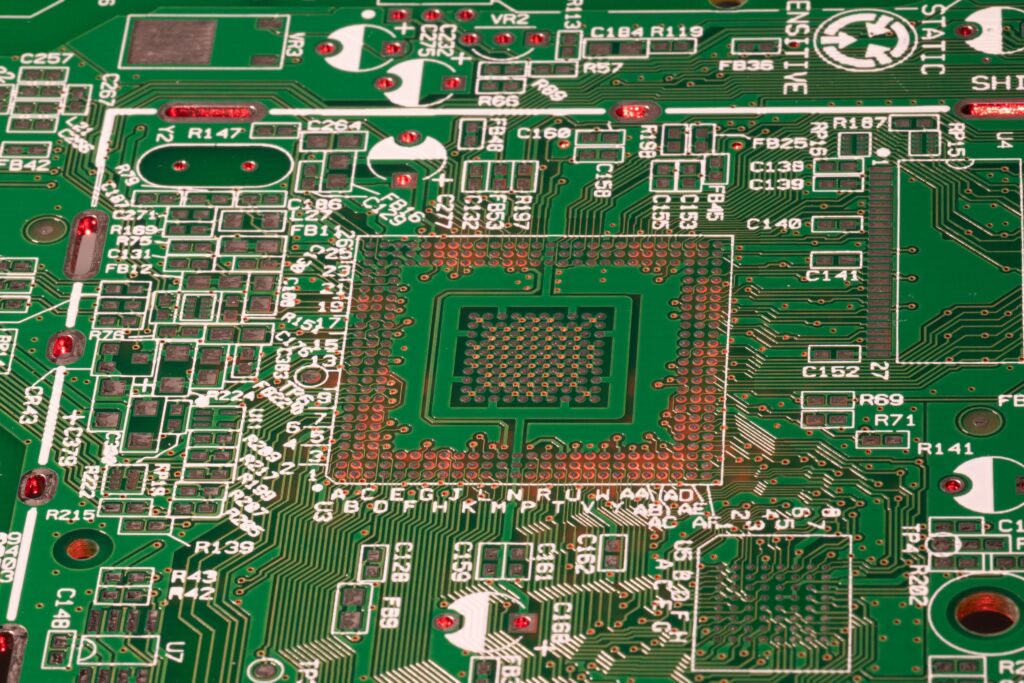
4. Final Quality Control (FQC)
Before the boards leave the production line, they go through final testing and inspection:
- Electrical test: Flying probe test or ICT (In-Circuit Test) for 100% connectivity verification. No shorts, no opens, no missing connections.
- AOI final scan: Automated optical inspection for solder mask defects, surface finish quality, and silkscreen legibility.
- Visual inspection: Our inspectors check for scratches, dents, discoloration, and cosmetic defects.
- Dimensional inspection: Profile dimensions, hole positions, and board thickness against your Gerber files.
- Solderability test: For surface finish verification—boards must wet properly during assembly.
5. Outgoing Quality Control (OQC)
As the final stage of our PCB quality control workflow, this is the last checkpoint before shipping:
- Packaging inspection: Boards are vacuum-sealed with desiccant and humidity indicator cards. Especially important for ENIG and moisture-sensitive laminates.
- Labeling: Part number, quantity, date code, and lot number match your order exactly.
- Documentation: We include test reports, COC (Certificate of Conformance), and packing list with every shipment.
- Shipping method verification: Fragile boards get reinforced packaging. Express shipments get priority handling.
I. Why Quality Control Matters by Industry
Different industries have different quality requirements. We adjust our inspection process based on your application:
1) Consumer Electronics
Cost-sensitive but reliability matters. We focus on dimensional consistency and solderability for high-volume SMT assembly.
2) Industrial Control
24/7 operation requires long-term reliability. We do additional thermal cycling tests and extended burn-in verification.
3) Automotive
Vibration, temperature extremes, and long product lifecycles. We use higher TG materials and stricter impedance control.
4) Medical Devices
Regulatory compliance is critical. We provide full material traceability, inspection reports, and lot tracking for every board.
5) Aerospace & Defense
Highest reliability standards. We offer 100% X-ray inspection, extended environmental testing, and full documentation packages.
II. Common PCB Quality Problems We Catch Before Shipping
A lot of PCB suppliers promise good quality but only inspect at the very end. If a problem starts in the inner layer, you won’t find out until it’s too late.
Here are the most common issues we catch during our multi-stage process:
- Inner layer shorts or opens— Caught by AOI after inner etching
- Misaligned layers— Caught by X-ray after lamination
- Drill breakthrough or burrs— Caught during drilling inspection
- Poor hole plating— Caught by microsection after PTH
- Solder mask defects— Caught after mask application
- Surface finish issues— Caught by solderability test
- Dimensional errors— Caught during final FQC
Our multi-stage inspection means problems are caught early, not at the final test. Your boards match your Gerber files exactly.
III. Our Quality Promise
Every order from Volectronics Tech comes with:
- ✅ Free DFM review before production starts
- ✅ Multi-stage inspection reports available on request
- ✅ On-time delivery guarantee
- ✅ 30-day quality warranty
- ✅ Full material traceability for regulated industries
- ✅ Responsive engineering support—even after shipment
We don’t just build PCBs. We build them right the first time, so you don’t have to worry about rework.
IV. FAQ
(1) How long does quality inspection take?
Standard inspection adds 12–24 hours to the production lead time. For rush orders, we can prioritize inspection without cutting corners.
(2)Do you provide test reports?
Yes. Every order includes a basic test report. For regulated industries (medical, automotive, aerospace), we provide full inspection documentation, microsection reports, and material certificates.
(3)After-Sales Warranty and Support
We stand behind every board we ship. Our 30-day quality warranty covers any manufacturing defect—whether it’s a solder mask issue, surface finish problem, dimensional error, or electrical test failure.
- How It Works
If you receive defective boards, simply send us:
- Photos or videos of the issue
- The lot number on the packaging
- A brief description of the problem
Our engineering team will investigate within 24 hours. If the issue is confirmed as a manufacturing defect, we’ll reproduce and ship replacement boards free of charge—typically within 3–5 days.
V. Ready to Start Your Next Project?
Send us your Gerber files, BOM list, and assembly requirements. We’ll provide a detailed quote within 24 hours.
Volectronics Tech Co., Ltd — Your reliable PCB & PCBA partner in Shenzhen, China.
We also provide full box build assembly services from PCBA to finished product.