I. Specifications
| Item | Typical Value |
|---|---|
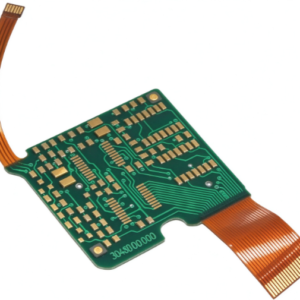
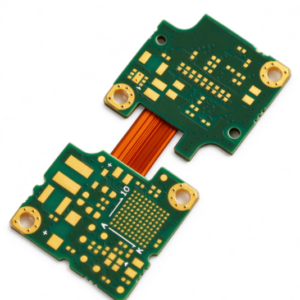
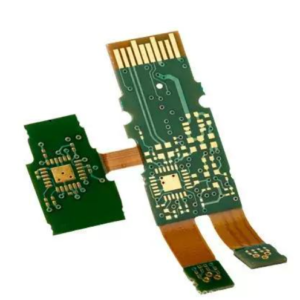
| Construction | Rigid multilayer (4–16L) + Flex core layers |
| Rigid Material | FR4, High Tg (170°C) |
| Flex Substrate | PI 12.5–25μm, RA/ED copper |
| Min Trace/Space | 4/4–3/3 mil |
| Bend Radius | Dynamic ≥10× thickness; Static ≥3× |
| Flex Life | 10k–100k+ cycles (RA copper) |
| Operating Temp. | −65 ~ +150°C |
| Impedance | 50/100Ω controlled |
| Surface Finish | ENIG (Ni/Au) |
II. Core Advantages
• Integrated molding reduces connectors and solder joints, ensuring high reliability;
• Lightweight and compact design saves space and weight;
• Flexible sections allow for 3D folding or bending during assembly;
• Resistant to vibration and shock, suitable for harsh environments.
III. Signal performance characteristics
- Controlled impedance for microstrip and stripline configurations, supporting high-speed differential signals;
- Multi-layer internal shielding to reduce crosstalk;
- Impedance margin reserved in flex zones, avoiding routing across areas subject to sharp bending.
IV. Design and Manufacturing Features
- Route traces perpendicular to the bend axis in the bending zone; prohibit vias and pads in this area.
- Center the flexible layer (neutral axis) to minimize bending stress.
- Incorporate extended buffer zones at the rigid-flex transition to prevent tearing.
- Use RA (rolled-annealed) copper and PI coverlay for dynamic bending applications.
- Conduct reliability testing, including thermal cycling, temperature-humidity exposure, and flex-life testing.
Volectronics Tech Co., Ltd , as a professional PCB manufacturer, we have a strong engineering team, who can check gerber file sent from customers carefully and raise some useful suggestions.
Welcome to contact us for a quote!