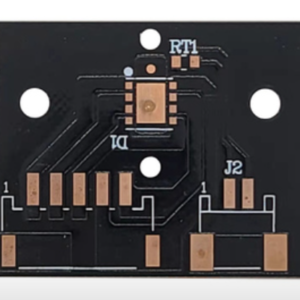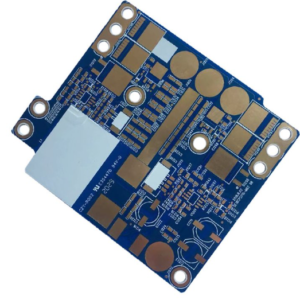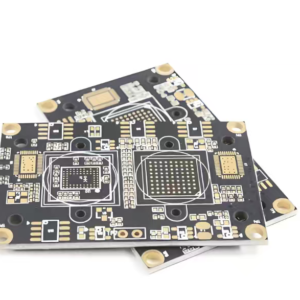
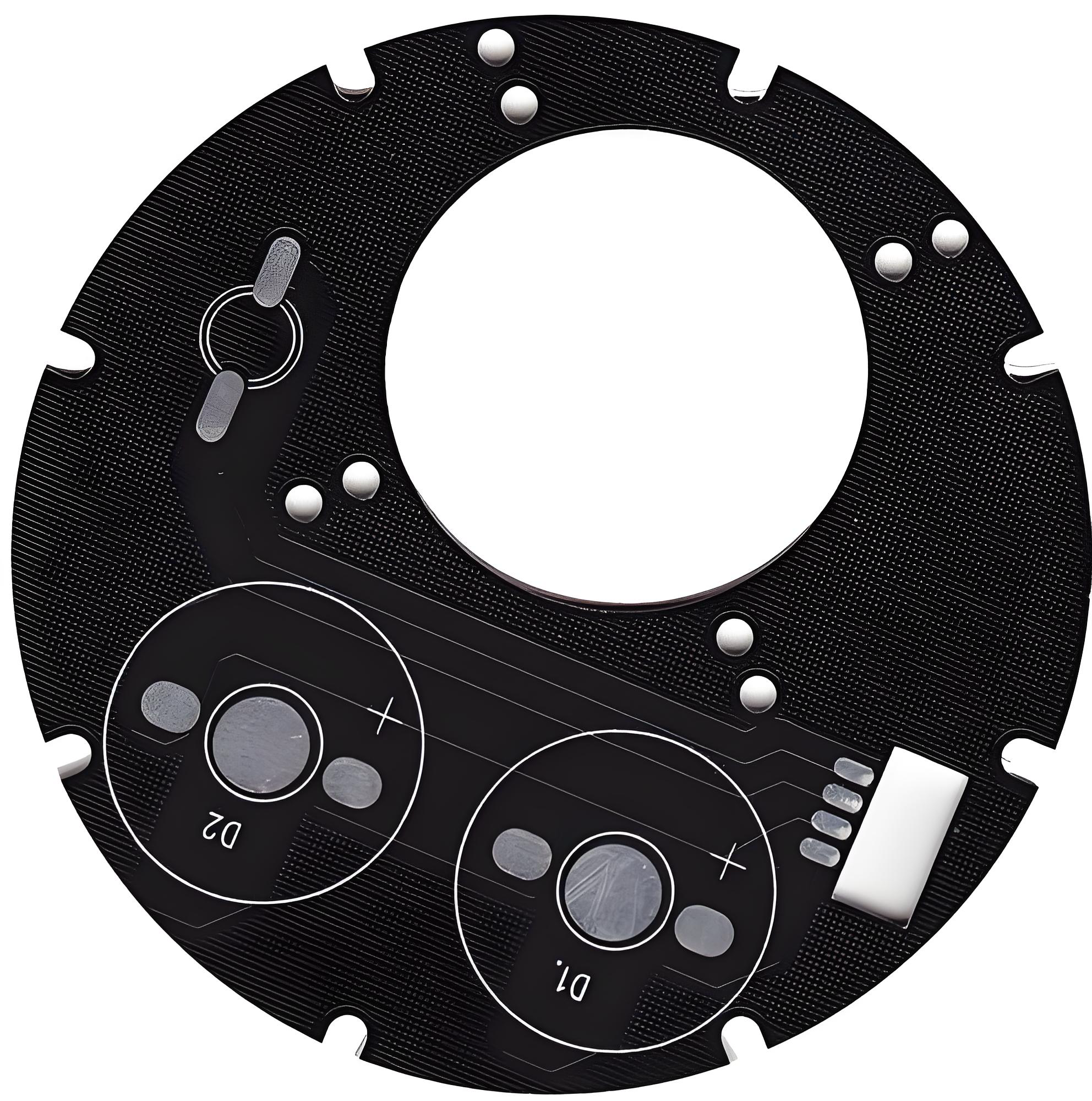
Aluminum PCB features high thermal conductivity aluminum base material, quickly dissipating heat generated by high-power LED and power electronic components. It is widely used in LED lighting, power supply, automotive electronics and other heat-sensitive applications.
Key Parameter Specifications of Aluminum Substrate
| Project | Specification range |
|---|---|
| Thermal conductivity of the insulating layer | Standard 1–3; High thermal conductivity 4–9 W/m·K |
| Thickness of the insulating layer | 50–150 μm (thin → low thermal resistance) |
| Thickness of the aluminum base plate | 0.8~3.2mm |
| Copper thickness | 1~4oz (High Current Thickened) |
| Withstand Voltage (Insulation) | AC 1500-2500V standard |
| Thermal resistance Rth | 0.5–5 K·cm²/W (depending on the insulation layer) |
| Thermal resistance Rth | The Tg of the insulating layer is 130 to 180℃ |
Performance characteristics
- Excellent heat dissipation: Aluminum boards have a thermal conductivity of approximately 150 W/m·K—far higher than that of FR4 (approx. 0.2–0.4)—allowing heat to be efficiently conducted away vertically, thereby lowering operating temperatures and extending the lifespan of LEDs and power components.
- Dimensional stability: The aluminum substrate offers high mechanical strength and resistance to warping, making it suitable for large panels and vibration-prone environments.
- High current-carrying capacity: Thickened copper can handle currents of tens of amperes.
- Electrical isolation: The insulating layer conducts heat while providing electrical insulation, electrically isolating the device from the baseplate and ensuring the withstand voltage meets safety standards.
- EMC Shielding: The aluminum baseplate naturally serves as a shield/reference plane, suppressing interference.
Solder mask characteristics
- The surface solder mask on aluminum-based boards is the same as that on standard boards (green, black, white, etc.); however, white solder mask is commonly used for high-power LEDs to enhance reflectivity, while black is used to aid heat dissipation.
- The insulation layer is the “true solder mask/isolation layer”—it provides electrical isolation and thermal conductivity between the copper layer and the aluminum plate, and its quality determines reliability.
- Note: The aluminum plate serves as the metal substrate, supporting circuitry on only one side (with no through-hole interconnects to the base plate). Any vias requiring electrical isolation must not penetrate the aluminum plate (insulating via-plugging is required) to prevent short circuits.
- For applications requiring high thermal conductivity, a heat-resistant solder mask should be selected to prevent cracking.
Signal performance characteristics
- The essence of the aluminum substrate is a single-sided conductive layer + a large area ground (aluminum plate). It can be regarded as a simple reference ground structure. The impedance is relatively stable and suitable for power/low frequency/analog signals.
- Not suitable for high-frequency or high-speed applications: Aluminum-based substrates feature a relatively thick insulating layer and higher dielectric loss, and lack the fine multi-layer signal-ground structures required; consequently, they are generally not used for RF or high-speed digital circuits.
- Not suitable for high-frequency or high-speed applications: due to the relatively thick insulation layer, high dielectric loss, and the absence of fine multi-layer signal-to-ground structures, aluminum-based substrates are generally not used for RF or high-speed digital circuits.
- Suitable signals include: LED constant current, switching power supplies (PWM), motor drives, and drive/control signals for power modules.
Volectronics Tech Co., Ltd specializes in higher layer count PCBs, exotic materials, laser drill micro-vias, blind/buried vias, as well as conductive and non-conductive via fill.
Feel free to contact us for a quote!